The Fourth Industrial Revolution and Smart Factories
Peering into the dimly lit floor of an aging manufacturing plant, a factory worker is surrounded by the clatter of machinery as outdated processes struggle to meet rising demands.
Fast forward to a nearby facility where a seamless symphony of robotics and artificial intelligence orchestrates production with precision and efficiency. This evolution exemplifies the transformative power of the Fourth Industrial Revolution, marked by the rise of smart factories.
These technologically advanced environments leverage:
- The Internet of Things (IoT)
- Cloud computing
- Advanced analytics
These technologies revolutionize conventional manufacturing operations. Unlike their predecessors, smart factories operate autonomously, optimizing production schedules, reducing waste, and predicting equipment maintenance needs.
As industries align with this new paradigm, the convergence of digital and physical worlds fosters unprecedented levels of productivity and efficiency. The transition, however, is not merely a technological upgrade; it is a fundamental shift in how goods are produced, leading to broader implications for the global economy and workforce dynamics.
For those interested in exploring this transformation further, all information can be found online.
Embracing Technological Advancements in Manufacturing
Manufacturers are increasingly adopting cutting-edge technologies like automation and artificial intelligence to enhance production efficiency and competitiveness. These advancements are pivotal in fostering a sense of community among forward-thinking enterprises seeking to maintain a competitive edge.
The integration of Internet of Things (IoT) devices in manufacturing processes facilitates real-time data collection, driving informed decision-making and operational improvements. IoT, when combined with cloud computing, offers scalable solutions for data storage and processing, enabling manufacturers to quickly adapt to market changes.
Moreover, the utilization of advanced analytics transforms raw data into actionable insights, optimizing manufacturing operations and reducing waste. Analytics empower organizations to:
- Predict maintenance needs
- Improve product quality
- Streamline supply chains
Embracing these technologies not only enhances productivity but also aligns manufacturers with modern industry standards, promoting a shared vision of innovation and growth.
As a result, companies that effectively integrate these technologies into their operations position themselves as leaders in the ever-evolving landscape of the Fourth Industrial Revolution.
The Impact of Internet of Things (IoT)
The integration of Internet of Things (IoT) devices significantly transforms industries by enabling seamless connectivity and data-driven insights. IoT facilitates real-time communication among devices, machinery, and systems, creating an interconnected ecosystem that enhances operational efficiency and innovation. This technological advancement allows industries to harness valuable data, which can be processed and analyzed to inform decision-making and strategic planning.
Analytics plays a crucial role in maximizing the potential of IoT:
- It provides the tools necessary to interpret vast amounts of data generated by connected devices.
- By leveraging analytics, industries can gain insights into performance trends, predictive maintenance requirements, and optimization opportunities.
- This fosters a culture of continuous improvement and innovation.
Cloud computing complements IoT by offering:
- Scalable storage solutions.
- Processing capabilities essential for managing and analyzing the data collected from IoT devices.
This synergy between IoT, analytics, and cloud computing empowers industries to achieve greater transparency, adaptability, and competitiveness, ultimately driving the evolution of smart factories and the Fourth Industrial Revolution.

Optimizing Operations with Cloud Computing
Industries leverage cloud computing to streamline operations, enhancing efficiency and scalability through on-demand resources and advanced data processing capabilities.
Integration with the Internet of Things (IoT) allows cloud computing to enable seamless data exchange across devices, fostering a connected ecosystem. This integration enables businesses to optimize operational workflows, as real-time data collection and storage become more accessible and manageable. Consequently, organizations can efficiently address production bottlenecks and adapt swiftly to market demands.
The adoption of cloud computing facilitates advanced analytics, providing insights that drive informed decision-making and strategic planning.
- With cloud-based platforms, data from IoT devices can be aggregated and analyzed, offering comprehensive visibility into production processes.
- This ability empowers industries to anticipate maintenance needs, reduce downtime, and enhance overall productivity.
Cloud computing supports scalability, allowing enterprises to expand operations without significant infrastructure investments.
The collective use of IoT and cloud computing thus establishes a robust foundation for smart factories, fostering innovation and collaboration within the industrial community.
Enhanced Efficiency through Advanced Analytics
Leveraging advanced analytics significantly boosts operational efficiency by transforming raw data into actionable insights.
In the realm of smart factories, the integration of IoT devices and cloud computing facilitates the continuous collection and analysis of data streams. This integration allows for real-time monitoring and optimization of production processes, ensuring that operations remain agile and responsive to dynamic market demands.
Advanced analytics, when applied to this data, identifies patterns and anomalies that might otherwise remain undetected. This capability not only enhances decision-making processes but also contributes to the anticipation of maintenance needs, thereby minimizing downtime and maximizing productivity.
By employing analytics within the cloud computing infrastructure, smart factories can store and process vast amounts of data efficiently. This setup encourages a collaborative environment where stakeholders access insights that drive collective improvements in operational efficiency.
The alignment of IoT, cloud computing, and analytics fosters a sense of shared purpose and community, which is crucial for thriving in the Fourth Industrial Revolution.
Autonomy in Smart Factory Operations
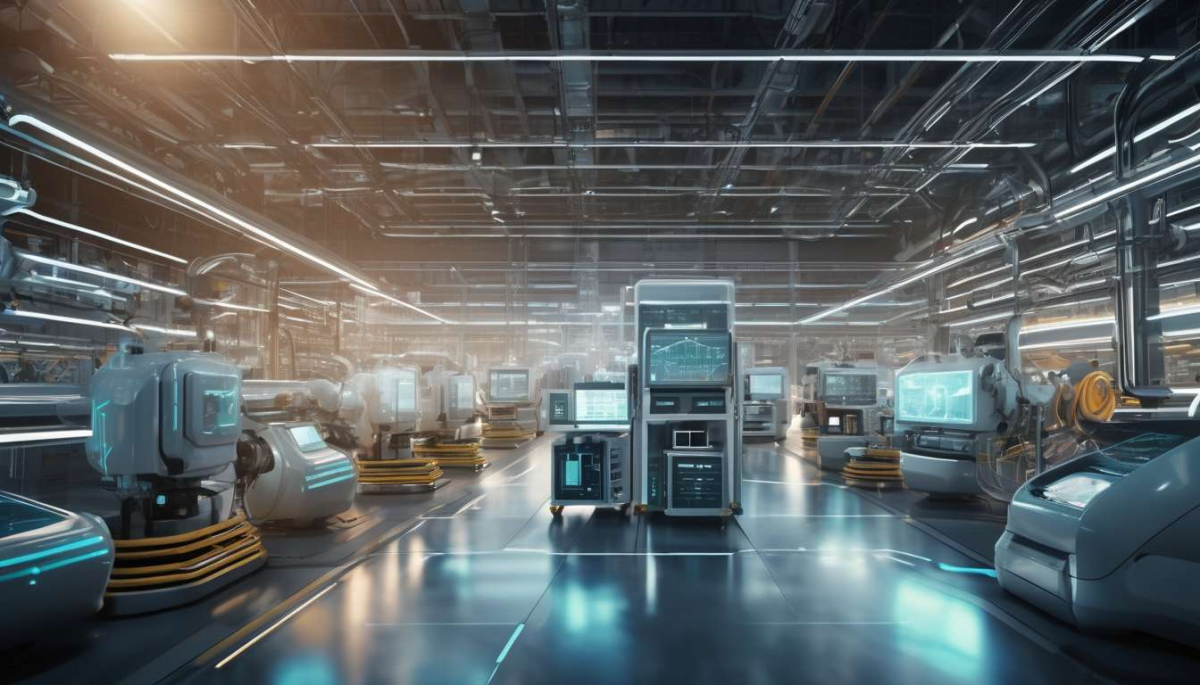
Smart factories achieve a new level of operational autonomy by employing advanced robotics and AI-driven systems to manage and optimize production processes with minimal human intervention. This transformative capability is significantly enhanced by the integration of the Internet of Things (IoT), which facilitates seamless communication among machines, systems, and networks.
Key Components of Smart Factories:
-
IoT Devices:
- Collect and transmit data.
- Enable seamless machine-to-machine communication.
-
Cloud Computing:
- Processes data collected by IoT devices.
- Ensures real-time, scalable access to information.
These technologies empower smart factories to adapt and respond efficiently to changes in demand or operational conditions.
Role of Analytics:
Analytics plays a crucial role in this ecosystem by offering insights derived from the vast amounts of data generated within the factory. By leveraging analytics, smart factories can:
- Predict maintenance needs.
- Improve product quality.
- Reduce downtime.
This data-driven approach fosters an environment where innovation and efficiency coexist, aligning with the broader objectives of the Fourth Industrial Revolution.
Thus, the autonomy of smart factories represents a significant advancement in manufacturing, promoting a connected and collaborative industrial landscape.
Implications for Global Economy and Workforce
The rise of smart factories is poised to transform the global economy by redefining manufacturing processes and reshaping the workforce landscape.
As industries embrace IoT, cloud computing, and analytics, production efficiency and customization are expected to reach unprecedented levels. The integration of these technologies facilitates real-time data exchange and decision-making, enabling businesses to:
- Respond swiftly to market demands
- Optimize operations
In the context of the workforce, these technological advancements necessitate a shift in skill requirements. Traditional manufacturing roles may decline, while demand for expertise in:
- IoT
- Data analytics
- Cloud-based systems
grows. This evolution presents opportunities for skill development and retraining, fostering a workforce equipped to thrive in digitally-driven environments.
As smart factories become more prevalent, global economic dynamics may shift, with nations investing in technology infrastructure likely to gain a competitive edge. The collaborative potential of interconnected systems can lead to:
- Cross-border partnerships
- Fostering a sense of global belonging
- Shared progress in the industrial sector